-
5 Reasons Why We Should Use Artificial Grass for Landscaping

Many of us have encountered some sort of problems with proper maintenance of our landscape. Especially when using the real natural grass, whether indoor or outdoor and within residential or commercial settings. Such problems require an endless amount of energy, time, and cost. Some have grown tired of it and some have gotten used to it, whether they like it or not. To keep the landscape beautiful without facing those problems, the only solution is to use artificial grass.
Then, why should we use artificial grass? What advantages can we get from using synthetic grass? Okay, those questions may come to mind. To find the answer, let’s see the following advantages below!
1. Low Maintenance
Similar to animals and humans, real natural grass and leaves are living beings that require extensive care from their intakes, such as food, water, and minerals, to their surroundings (dry vs humid, sunlight, and others). Such attention has to be given to real plants on a daily basis continuously.
Moreover, there’s also the risk of lacking or getting over some things, such as water, sunlight, or minerals, which can cause harm to them. Unlike humans and animals, they cannot speak or make any sound to express their sufferings or problems. Therefore, it is totally understandable that maintaining real grass, plants, and leaves to be evergreen is a constant challenge for us.
But, unlike real grass, we don’t need to give more attention to artificial grass. In other words, by using artificial grass, we can save our time, energy, and money at the same time.
2. Low Cost Artificial Grass
Low maintenance also means low cost. Artificial or synthetic grass may involve a higher initial cost in the beginning compared to real grass. However, artificial grass does not incur any additional cost over time, unlike real grass that does exponentially. Usually, Break Even Point (BEP) for artificial grass investment is less than 1 year, due to constant maintenance cost of real grass, such as gardener fees, water bills, fertilizer, replanting grass, and others.
How about the vertical garden? As opposed to artificial grass, the initial investment cost on an artificial plant for a vertical garden is even lower than the real one. Artificial vertical gardens do not require any maintenance costs over time, unlike real vertical gardens.
3. Evergreen and Natural Look of Artificial Grass

artgrass.asia Every living thing is not immortal, including a plant. Yes, a real plant can wither or even die at some time. It can turn yellow in summer and make the yard or landscape seem dry. This is also another problem with using real grass for landscaping. But, this won’t happen if we choose artificial grass because it will always look green all the time, in every season.
The thing to note is not all the artificial grass that is sold in the market looks fake or unnatural. By choosing the right product, synthetic grass can also give a natural appearance, just like real grass. The green nuance will make our landscape feel fresh and homey.
4. Easy to Install
The installation of artificial grass is quite easy. The first step is to prepare the synthetic grass and the area to be installed. Make sure the ground is level, clean, and dust free, so that the grass sticks perfectly. Measure the grass in the area to be installed, then cut and paste. After that, trim the artificial grass to make it look more natural.
The use of artificial grass is also flexible, and can be installed indoors or outdoors because it does not require sunlight to grow like real natural grass does.
5. Best and High Quality Artificial Grass is Available

artgrass.asia Responding to customer concerns about having to spend endless time, energy, and money on maintaining real grass, ArtGrass was introduced back in 2013 with a wide selection of artificial grass in a class of its own. Its look and feel closely resembles real natural grass, solid durability, top notch production quality with certificates, authentic warranty and after-sales service which automatically comes along with every purchase.
Besides that, due to increasing customer expectations on wall decoration needs, ArtVertical was also introduced back in 2017 as an outdoor specialist vertical garden solution as it is equipped with similar Anti-UV protection that its predecessor, ArtGrass. ArtGrass has an average lifetime span of 8 to 15 years (outdoor), with a 3-5 year warranty, while ArtVertical has an average lifetime span of 5 years (outdoor), with a 3 year warranty.
Artgrass is considered by many to be different compared to the other brands of artificial grass out there, because ArtGrass is primarily designed to emulate the best attributes of real natural grass with our natural appearance and soft feeling. ArtGrass means Artificial, yet Artistic Grass! Artificial Grass might never be the same as Real Grass. However, only the highest quality such as ArtGrass would guarantee to bring out the most Artistic value without the drawbacks of Real Grass.
-
How to Plan a Good Kitchen Area Design Based on Client’s Needs?

Have you ever heard the saying “the kitchen is the heart and soul of the house”? Meal preparation and cooking have always transcended the literal meaning of the activity itself.
Thoughtful interior designers are usually aware, there are interrelated physical and emotional aspects of kitchen design that go hand in hand. A poorly designed kitchen will likely discourage family members from spending quality time in the kitchen, where comfort, safety, and a well-equipped kitchen set are essentials.
Many people who don’t have access to a decent and well-designed kitchen will not feel like cooking regularly. Problems with kitchen design and ergonomics are common and entirely solvable by talented interior designers. Bear in mind that every family possesses their own needs, requirements, tastes, and vision of the perfect kitchen.
It is the job of an interior designer to be able to accommodate these specific requests from clients. How you, as interior designer, are able to design a good kitchen area by integrating fundamental kitchen design aspects and accommodating the clients’ distinctive needs based on what they envision. These are some of the characteristics and criteria that may be able to guide you:
A Well-Designed Kitchen Set and Work Station For Every Needs
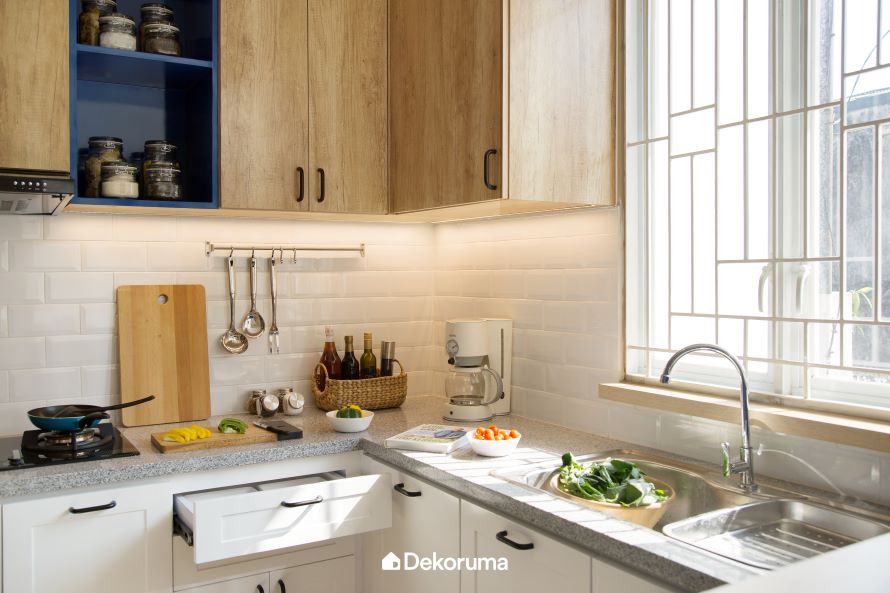
dekoruma.com The general definition of a well-designed kitchen is when the cooking area is adequate. Abundant countertops for seamless meal prepping and cooking workflow, plenty of storage space ensuring the kitchen tidiness, optimal natural and artificial lighting for aesthetic and safety purposes. State of the art equipment and the overall placement and arrangement of kitchen set and furniture.
On the other hand, a well-designed kitchen is also the reflection of its client’s needs. Therefore, do not forget to make their visions in cooking come to life through unique details that are tailored based on the client’s requirements.
For example, for experimental clients who like to try out new recipes, a well-designed kitchen set needs to emphasize more on ensuring a seamless workflow for cooking. Also, additional features of what they want. A larger bar area for regular drinkers, pot filler tap for extra practicality, or specific marble countertop to enhance the kitchen’s aesthetic.
Proper Washing Area To Promote Hygiene and Cleanliness In The Kitchen

shutterstock.com Besides appliances, equipment, and cooking-related furniture, designing a good kitchen also means setting up a proper washing area. Since a dishwasher is not a part of Indonesians’ kitchen culture, choosing the right kitchen sink has to be done properly. One of the key indicators is looking at how often family members actually use the kitchen, followed by taking into account the size of the kitchen.
It goes something like this. For a big family who cook three times a day for the whole family, a double or triple bowl kitchen sink should be the right capacity for their needs. Meanwhile, a single person and newlywed couple should be fine with a single bowl kitchen sink.
Interior designers can also be proactive and recommend a multifunctional approach to kitchen sink choices. Featuring smart features such as sink cover which acts as an extra cutting board, integrated washing basket to wash vegetables and fruits, and attached trash bin for organic waste to name a few.
Sufficient Storage Space Ensuring Tidiness and Well-Organized Kitchen

dekoruma.com Storage and kitchen organization is also a fundamental part of kitchen design. A kitchen with less and insufficient storage space is more likely to be messy, disorganized, and cluttered. Where users need a lot of time and effort just to find a pot to boil water. A disorganized kitchen will feel frowsy and disheveled.
Therefore, planning a sufficient storage space for your client’s kitchen must be done from the beginning. Most common indicators are kitchen size, number of appliances and equipment, in addition, by also matching the client’s cooking habits and workflow.
There are some tricks that you can apply as interior designers. First, maximize closet storage space such as kitchen cabinets, drawers, and shelves. Then, add some extra open and floating shelves for decorative purposes. Also, put in some useful details such as kitchen utensil organizers, plate rack, or glass hanger rack for maximum storage capacity.
Essential But Often Forgotten: Systematic Waste Sorting And Management
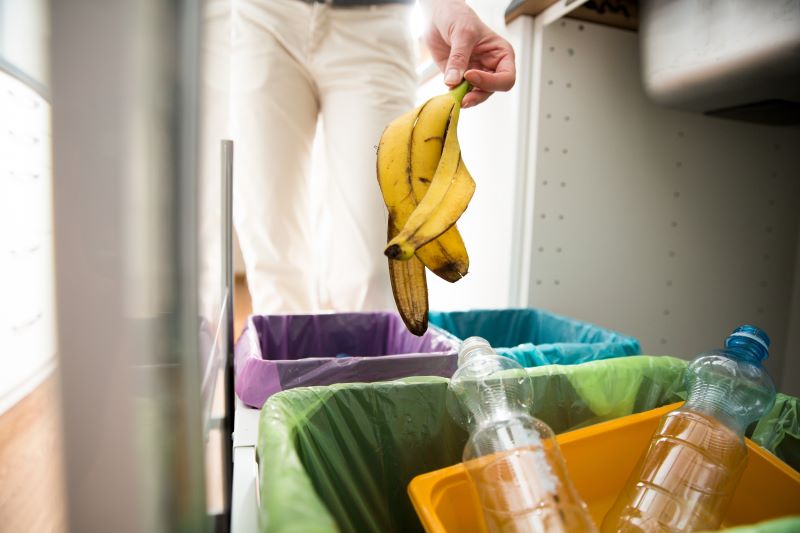
shutterstock.com This particular aspect is important, but often forgotten or overlooked. Waste sorting and management in the kitchen is also a part of fundamental kitchen designs framework, which should be recommended to your client. A proper waste sorting and management system will contribute to cleanliness and hygiene aspects of your client’s kitchen.
Beginning with placing more than one trash bin to sort the types of trash that usually produced in a kitchen. The basic system is dividing organic and inorganic trash. Organic trash needs to be taken out daily to prevent organic food waste from rotting, resulting in a smell-free kitchen.
More specifically, you can also prepare a more advanced waste sorting system. Dividing organic waste to be thrown away and composted. Then, inorganic trash is put into different categories to be recycled, reused, and reduced. Another part from interior designers can also be designing integrated trash bins in the kitchen’s drawer.
As your client steps into their newly-designed kitchen, they will be reminded of how talented their interior designer is. These may feel like quite a lot of aspects to put into account. However, with an intuitive interior design software such as Thudio, you can simplify the designing process with ready-to-use 3D models.
Finding the right software is essential for interior designers. Since it determines how fast an interior designer can design effectively, providing what the client wants through visually superior design, and meeting the deadline at the same time. Therefore, you can provide a good kitchen sketch in no time.
-
Just 1 Click, Designing with Real Interior Products in SketchUp
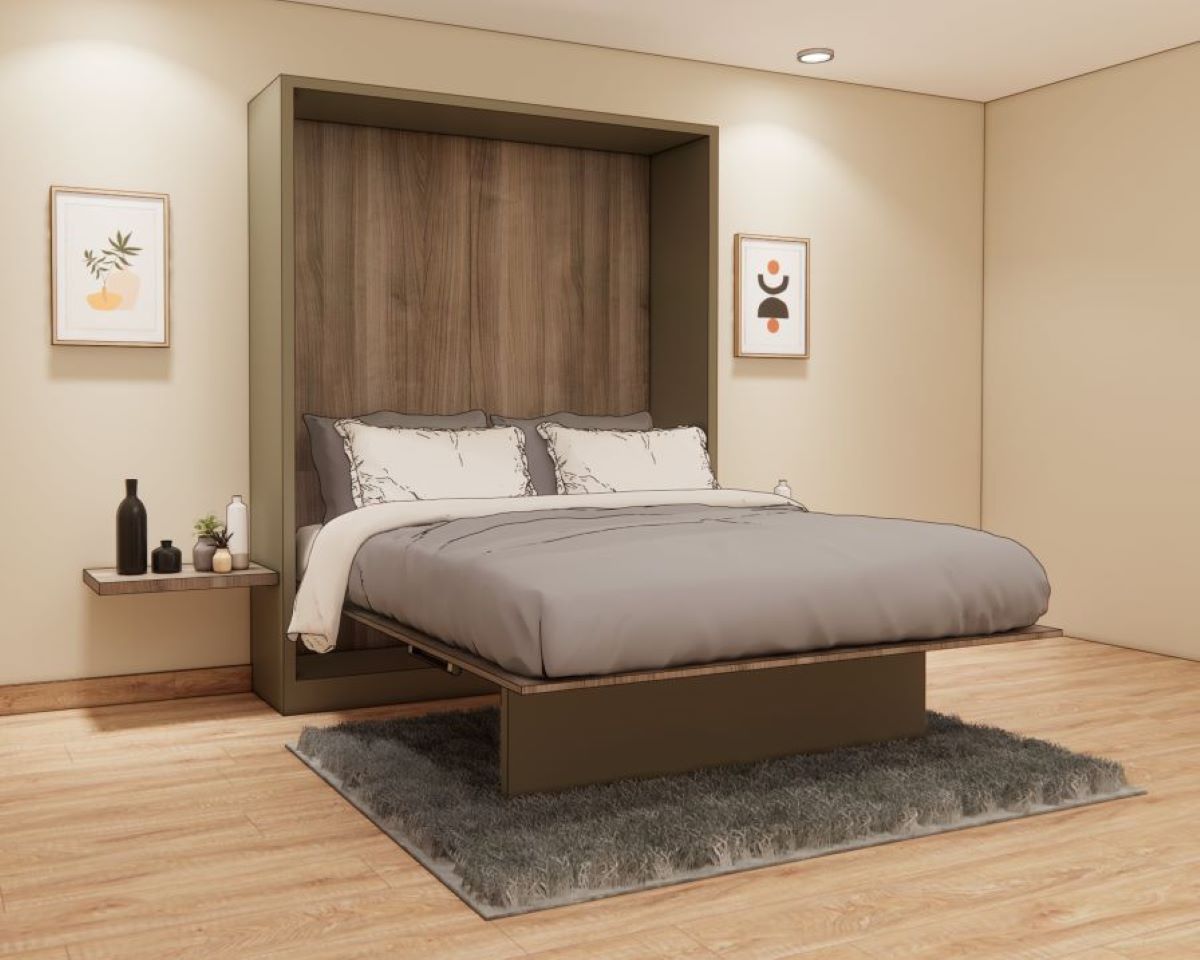
The process of designing a home is pretty complex. There are many parties that are involved in the process from beginning to end, such as: Interior designer/ architects, estimators, project managers, procurement and production teams. Interior designers and architects need to translate customer needs into design, material, and budget, all the while needing to coordinate with the rest of the team.
More often than not, some common difficulties arise in the process. Let’s see, do you often get these following problems too in your interior projects?
Turning Your Idea Into 3D Design and Then Into Reality

shutterstock.com In an interior project, we as interior designers on average would be dealing with 20+ brands and product types to realize our design, including the material, furniture, custom furniture, lighting, appliance and so on. More often than not, even if we already know the exact brand/ product, we struggle to visualize them into our 3D design.
We have to find similar 3D/ textures or even create it from scratch, just to apply them to our design in Sketchup. Sometimes we have to contact the brands one by one to ask for the 3D model or textures. And we have to do it for every product/brand in our design, which takes up a lot of time and energy.
The other way around is also true. Let’s say we already have the 3D/ textures that fit into our design, they match our expectations and we apply them to our 3D design. When the time comes to estimate and build our projects, only then do we struggle to translate our design into real products/brands that are available in the market.
This process usually takes a lot of time, because we have to match them to real products and specifications in the market, from multiple vendors. More so when involving a customer’s decision due to unavailable products, difference in specifications, and budget expectations.
Design with Real Interior Products
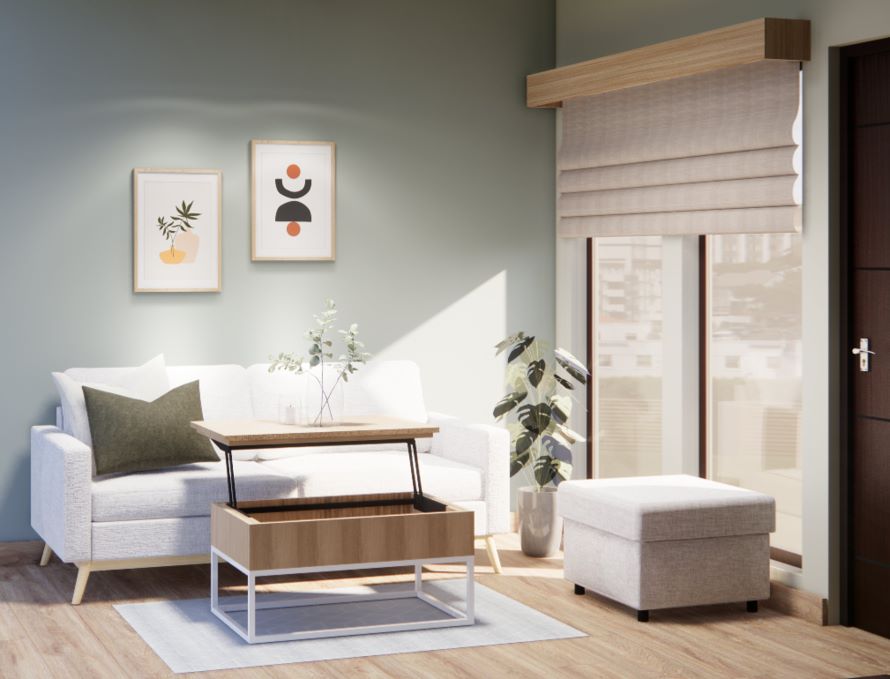
dekoruma.com Aware of those problems or pain points for designers and architects, Dekoruma develops Thudio (previously known as SOMA) based on a practical idea: “Why don’t we design with real interior products from the get go? It will make work more efficient, precise and enjoyable”. Previously this process was simply not feasible due to the lack of a platform and the fragmented nature of the industry.
To deal with this problem, Thudio innovates and collaborates with trusted brands and suppliers to provide a wide selection of real interior products ranging from furniture, decorations, materials (such as ceramics, wall paint, HPL, etc), appliances and even sanitary products for your design. And when it’s time to build the project, you can get the products in your nearby stores! This is only possible due to established collaborations between Thudio with trusted interior and home and living brand products such as Panasonic, TACO, Propan, and many more that will be added in the future.
By designing using real products, both furniture and material, you and the client will get the final result as expected, reducing the chance of complaints. Also it will reduce the extra time spent to align specifications between designers, estimators, production and procurements, which could amount to up to 20% of overall project timeline.
Inside Thudio, there is a wide selection of interior real products ranging from furniture, decorations, materials (such as ceramics, paint, sanitary, HPL, etc), and electronics from awesome brands that are available in your nearby stores. All these products are available in the local market and the prices for furniture are already listed. So, while choosing the interior product, you can also consider which one is still within the client’s budget. No more endless browsing for 3D models & textures!
Thudio Adds Superpowers to Your SketchUp
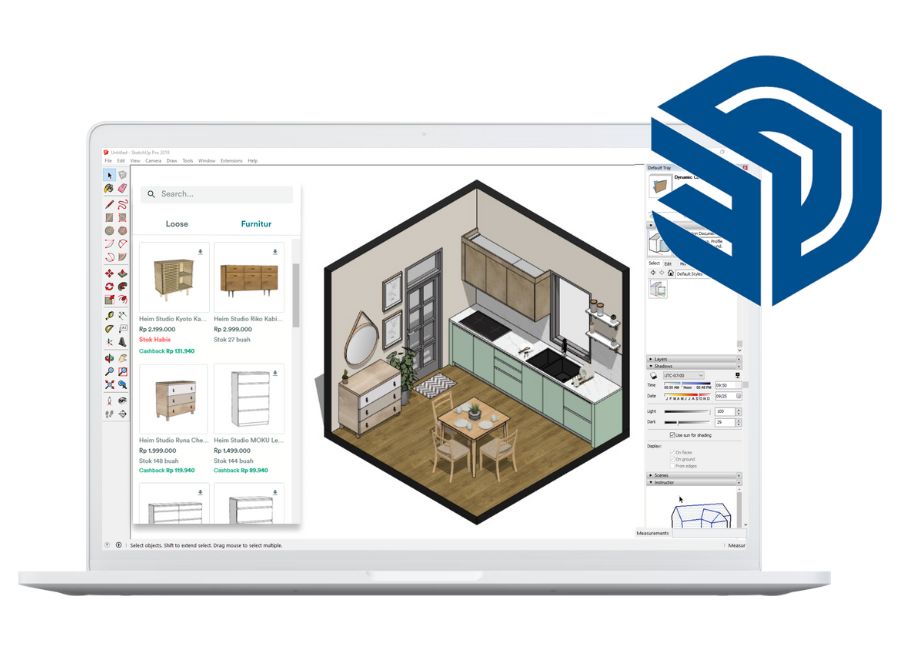
thudio.com The fun part is Thudio is a plugin for Sketchup (and it’s free!), therefore you don’t have to change your current workflow at all. You just have to download and install it to your Sketchup and voila now you can apply real interior products to your design in 1 click. And when your design is complete, you can proceed to use your favorite rendering and working drawing tools.
Thudio 3D models and textures are light-weight and optimized, making your design file size more manageable. Say goodbye to frequent laggy files and bugsplats. You also don’t have to worry about the hardware and software requirements, just make sure your hardware can run Sketchup and you’re good to go. Thudio can be installed on Sketchup 2017 or newer on both WIndows and Mac versions.
By using the Thudio plugin for Sketchup, the benefits are not only gained by interior designers and architects, but also all home and living industry stakeholders, including suppliers/brands, estimators,associations, and ultimately end customers. In the end, Thudio’s vision is to enable a sustainable platform and ecosystem for all home living industries.
Interior products at Thudio that you use in SketchUp are available in the local market, so there is no need for endless browsing and painful process of respecifying for every design revision.